The Great Blue Hole is one of the most photographed dive sites on the planet — and one of the most misunderstood. Before you commit a full day and a significant portion of your Belize trip budget to getting there, here is the honest local briefing I give every diver who asks.
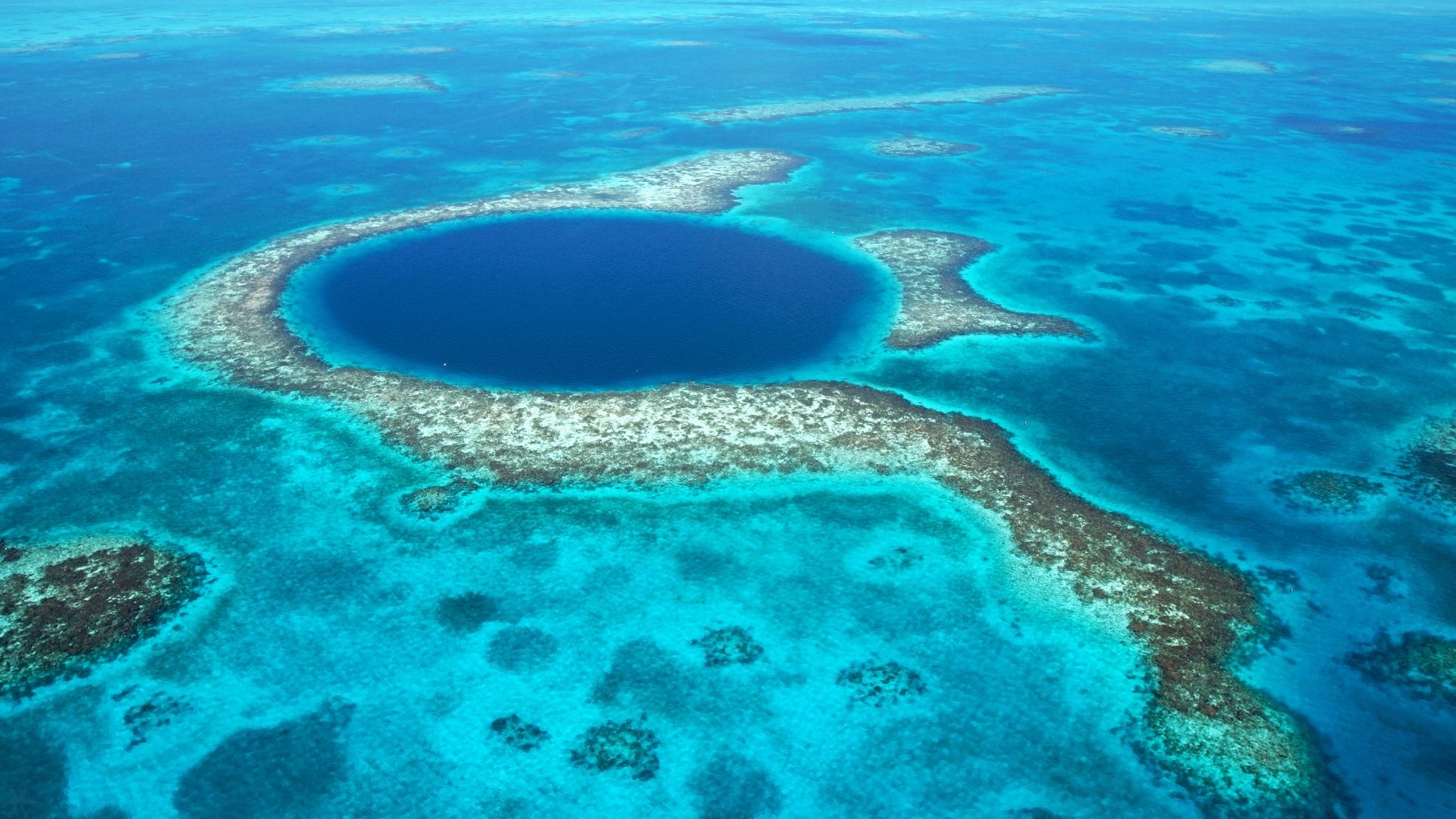
Every week, divers arrive in San Pedro and say the same thing: "I'm in Belize — I have to do the Blue Hole." I understand the impulse. It's a UNESCO World Heritage Site. It went viral after Jacques Cousteau declared it one of the world's top dive sites in 1971. The aerial photograph — a perfect circle of deep indigo ringed by turquoise atoll reef — is arguably one of the most recognizable images in all of scuba diving.
But the experience of diving the Blue Hole is quite different from the experience of looking at the Blue Hole. And I think every diver should understand that difference before they book.
What the Great Blue Hole actually is
The Great Blue Hole is a submarine sinkhole located at the center of Lighthouse Reef Atoll, approximately 70 kilometers east of Belize City. It's roughly 300 meters across and 125 meters deep — the largest marine sinkhole in the world.
It formed during the last ice age when the sea level was lower and the sinkhole was a dry cave system. As the glaciers melted and sea levels rose, the cave flooded and the ceiling partially collapsed, forming the characteristic circular opening we see today. The stalactites visible on the dive descend to depths between 40 and 130 feet — evidence that the formation happened when the site was above water and dry.
Today it sits within the UNESCO-designated Belize Barrier Reef Reserve System and is protected as a marine reserve. Diving it requires a day-trip from San Pedro or Caye Caulker — a 2-hour boat ride each way.
What the dive is like — honestly
The Blue Hole dive is unlike most reef diving. It is not a dive for people who want to see reef fish, coral, or vibrant underwater ecosystems. It is a structural dive — a dive defined by the geometry and geology of the hole itself.
The standard descent takes you down to 40 meters (130 feet) along the wall of the sinkhole. At that depth you encounter the famous stalactites — ancient limestone formations hanging at angles that couldn't exist if they formed underwater. You're essentially looking at a fossilized cave ceiling, now submerged. The formations are extraordinary. The experience of hanging in the open water column of a 125-meter hole, with the stalactites all around you, is genuinely eerie and memorable.
What you won't see: schools of fish, sea turtles, coral gardens, rays in shallow water, or the typical reef biodiversity that defines most Belize diving. The deep, clear, oxygen-depleted water in the lower sinkhole doesn't support much life. Visibility is exceptional — 30+ meters — but what you're looking at is mostly the cave architecture itself.
Bull sharks are sometimes seen cruising the rim of the hole, particularly in winter months (December through February). That's genuinely thrilling if it happens, but it's not guaranteed. Guides see them frequently; individual divers may or may not.
The honest local take
Most divers who do the Blue Hole say it's amazing. But many of the same divers, when asked what their best dive of the trip was, name something else — the Turneffe Atoll wall, Hol Chan, a night dive on the local reef. The Blue Hole is about the experience of being there. That's worth a lot. But manage expectations about wildlife.
Who the Blue Hole is right for
This is the most important question. The Blue Hole is a deep dive to 40 meters — PADI Advanced Open Water certification minimum, with deep dive specialty strongly recommended. It is not appropriate for Open Water-only certified divers, and it should not be your first or second dive in Belize.
The Blue Hole dive is best suited for:
- Experienced recreational divers (Advanced OW or higher) comfortable at 40m
- Divers who have logged enough dives to manage buoyancy cleanly at depth
- Anyone for whom the bucket-list aspect is a genuine personal goal — not just a "I guess I should" moment
- People willing to spend a full 10–11 hour day for approximately 30–35 minutes of actual underwater time at the Blue Hole (the trip includes additional dives at Half Moon Caye and the outer atoll wall)
It may not be the right use of a day for:
- Divers who primarily want wildlife-rich reef diving
- Open Water certified divers who haven't yet done Advanced
- People prone to sea sickness on longer open-water crossings
- Guests on short trips where every day counts and the atoll crossing weather is uncertain
The rest of the trip — Half Moon Caye and the Outer Wall
The Blue Hole trip is never only the Blue Hole. Most full-day excursions include two or three additional dives — typically at Half Moon Caye Wall, one of the finest wall dives in Belize, and occasionally at other Lighthouse Reef sites.
Half Moon Caye Wall is stunning: steep drop-off, healthy hard and soft corals, spotted eagle rays, grouper, permit, and exceptional visibility. The caye itself is home to a red-footed booby colony — hundreds of birds nesting in the trees above a white sand beach. Many divers who've done the trip say Half Moon Caye was the more beautiful dive of the day.
The combination means the day trip has more diving value than the Blue Hole alone — but you're building your day around a 2-hour offshore crossing each way, which is always weather-dependent.
Thinking about adding the Blue Hole to your Belize trip?
We can help you decide if it's right for your group, book the trip with a trusted operator, and build the rest of your itinerary around it. Reach out with your certification level and travel dates.
Talk to Us FirstConditions and timing
The Blue Hole trip runs year-round, but sea conditions on the 70km crossing can be rough from late November through February and again during the rainier months of June through October. The crossing is manageable in most conditions — the boats are purpose-built for this run — but if you're prone to motion sickness, bring medication and take it in advance.
Clearest water and calmest conditions: March through May and October through November. December to February can bring northerly swells that affect the crossing but rarely cancel trips entirely.
The best time to dive the Blue Hole for stalactite visibility: any time, as the deep water's clarity is consistent year-round. For bull sharks: late November through March. For calmer crossings: spring (March–May).
Booking the right operator matters
The Blue Hole is a serious dive in a remote location. Operator quality matters more here than on local reef trips. Group size, dive master ratios, safety equipment, boat condition, and the quality of the briefing all affect what you get out of the dive — and how safe you are at 40 meters in open water.
We only recommend operators we know personally at The Local Root Belize, and we coordinate the booking as part of your broader trip plan. If you're considering the Blue Hole, talk to us first — we'll make sure you're on the right boat with the right team.
Or, if the Blue Hole is the anchor of your trip and you want to build an itinerary around reef, atolls, and Ambergris Caye, take a look at our Reef & Rainforest Signature Journey — our most complete Belize itinerary framework.
The bottom line
The Blue Hole is worth doing if diving is central to your trip, you're an experienced diver, and the bucket-list experience genuinely matters to you. It is one of the most unique things you can do in any ocean, anywhere.
But it is not the dive that will make you fall in love with Belize's reef. That dive is more likely to happen on a Tuesday morning at a site 15 minutes from San Pedro, with a nurse shark drifting below you and a hawksbill turtle surfacing for air. The reef here is exceptional. The Blue Hole is extraordinary. They're different things, and the best Belize trips include both.