Most visitors to Belize never make it south of Dangriga. That's either a missed opportunity or one of southern Belize's best-kept secrets, depending on who you ask. From the Garifuna villages of Hopkins to the cacao farms of the Toledo District and the whale shark corridor off Gladden Spit — here's what's down there and why it's worth the journey.
The tourist trail in Belize runs a fairly predictable circuit: fly into Belize City, water taxi or domestic flight to San Pedro, snorkel the reef, maybe a day on the mainland. That circuit delivers extraordinary experiences — and we help guests do it exceptionally well at The Local Root Belize. But there's a whole country south of the Sibun River that most visitors never see, and it holds some of the most surprising and irreplaceable travel in all of Central America.
Hopkins: The Garifuna heartland
Hopkins is a small Garifuna village on the southern coast of Belize — about 3 hours south of Belize City by road, or a short domestic flight to Dangriga followed by a 20-minute drive. It sits between the rainforest-covered Maya Mountains to the west and the Caribbean to the east, and it's one of the best places in the world to experience living Garifuna culture.
The Garifuna are a people of mixed West African and Caribbean Amerindian ancestry, descendants of escaped enslaved people and the indigenous Caribs of St. Vincent who resisted British colonial rule and were eventually exiled to Central America in the late 18th century. Their culture — language, music, food, spirituality — survived that diaspora with remarkable tenacity and lives most visibly in Hopkins today.
What to do in Hopkins
- Garifuna drumming and dancing performances — the community hosts regular cultural evenings; not a tourist show, but local families sharing their tradition
- Learn to make hudut — a rich coconut-based fish stew eaten with mashed plantain that is the signature Garifuna dish; cooking workshops with local families are available with advance arrangement
- Stand-up paddle on the lagoon — Hopkins sits between the sea and the South Stann Creek, and the morning lagoon is mirror-flat and extraordinary
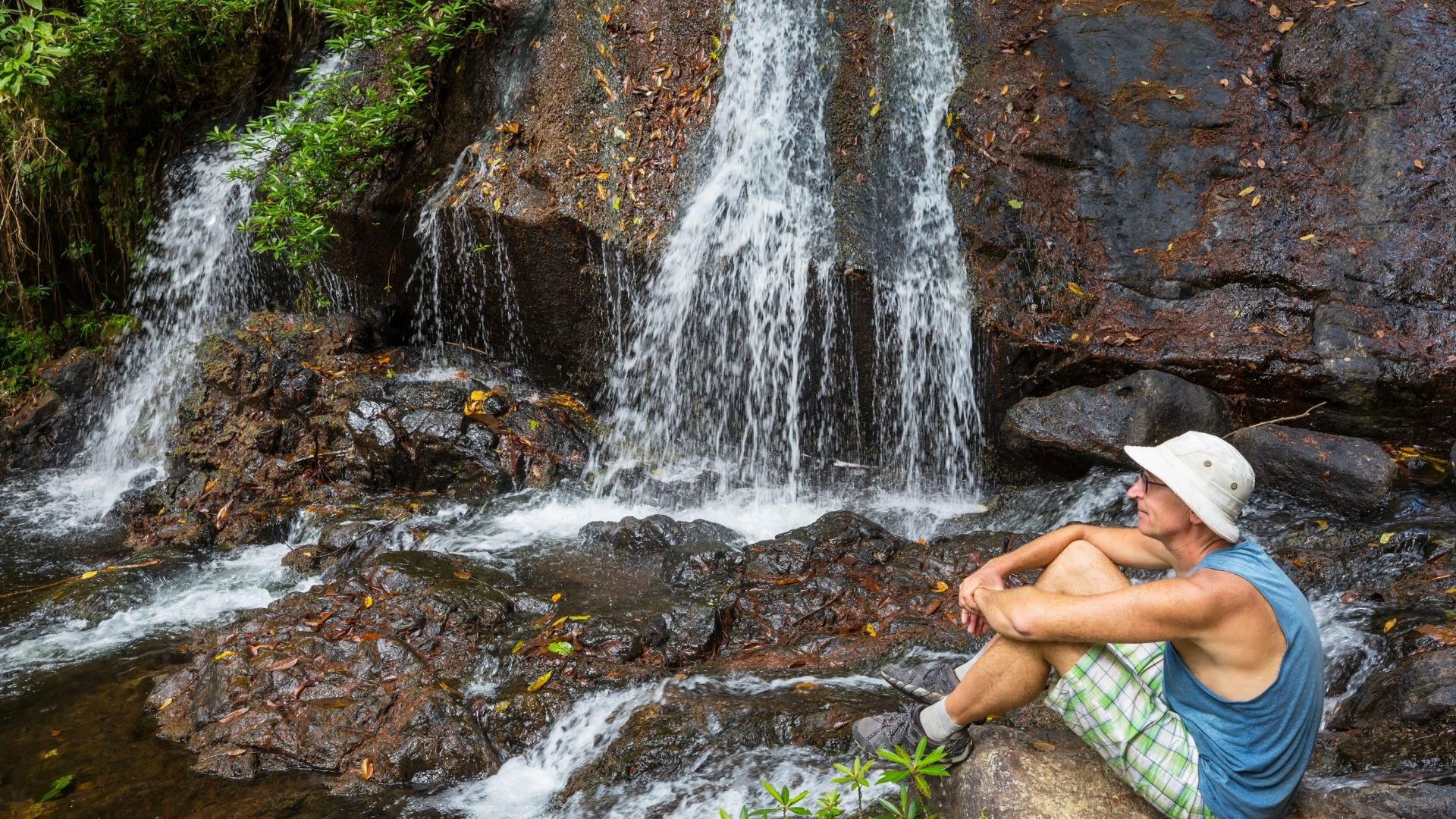
- Mayflower Bocawina National Park — a 15-minute drive into the foothills; excellent birdwatching, waterfalls, and a relatively uncrowded trail system through old-growth tropical forest
Glover's Reef Atoll: The diver's secret
Glover's Reef is the southernmost of Belize's three atolls and the one that sees the fewest visitors — largely because it requires more intention to reach (a 2+ hour boat ride from Hopkins or Dangriga). That difficulty is precisely its appeal. The reef here is among the least-impacted in the Western Caribbean: dense coral, exceptional visibility, and the kind of marine life density that reminds you what tropical reef diving looked like before the crowds arrived.
The diving at Glover's Reef is wall diving primarily — dramatic vertical drop-offs that begin at around 35 feet and fall away into open ocean. Sharks, eagle rays, turtles, and grouper large enough to be genuinely startling. For experienced divers, this is bucket-list diving in the truest sense — not because of a single famous site, but because of the consistency and quality across the entire atoll.
Gladden Spit: Diving with whale sharks
From March through June, around each full moon, whale sharks aggregate at Gladden Spit in the Placencia area to feed on snapper and grouper spawn. This is one of a handful of reliably predictable whale shark encounters in the entire world — an extraordinary thing in itself.
The whale sharks arrive in the days after the full moon when the fish spawn clouds the water with eggs. Divers descend to around 30 meters and wait in the blue water. When they come, the whale sharks move slowly through the spawn cloud — sometimes just one, sometimes three or four at once, up to 12 meters long and completely unconcerned with the divers alongside them.
This is a certified-diver experience (Advanced OW recommended, as depths reach 30m+) and requires booking well in advance — the full moon windows fill up quickly and only a limited number of dive boats are permitted at the site. If this is on your list, plan your trip timing around it and contact us early.
Interested in a southern Belize extension?
Our Deep South Explorer signature journey combines Ambergris Caye with Hopkins and the Toledo District. It's a different side of Belize — and one of our most-requested itineraries.
See the Deep South ExplorerThe Toledo District: Belize's forgotten south
Toledo is Belize's southernmost and least-visited district — a region of dense rainforest, Mayan villages, and the country's most biodiverse ecosystems. It receives significantly more rainfall than the north (hence the lush green) and it's home to a large population of Kekchi and Mopan Maya people who have farmed the same land for thousands of years.
Cacao and chocolate
Toledo produces some of the best cacao in the world. The Toledo Cacao Growers Association represents dozens of small family farms, most of them organic by practice if not by certification, growing ancient Maya cacao varieties with minimal intervention. Cacao farm tours are available — walking the trees with the farmer who tends them, learning the harvest process, watching the fermentation and drying — and they're among the most educational and moving agricultural experiences available anywhere in Belize.
Lubaantun and Nim Li Punit
Toledo has two significant Maya sites that receive a fraction of the traffic of more famous sites like Xunantunich or Lamanai. Lubaantun (which means "place of fallen stones" in Kekchi Maya) is particularly striking: the structures are built without mortar, the limestone blocks fitted with extraordinary precision that has kept them standing for over a thousand years. Nim Li Punit is notable for having one of the largest collections of Maya stelae — tall carved stone monuments depicting rulers and historical events — in all of Belize.
How to visit southern Belize
The honest constraint: southern Belize requires time and planning in a way that Ambergris Caye does not. The easiest approach is a split itinerary — several days on the island for reef activities, then a domestic flight to Dangriga or Punta Gorda and time in the south before flying home from a southern hub.
Our Deep South Explorer Signature Journey is built around exactly this structure. It's our answer to the question "can we see the real Belize in one trip?" — and it combines reef, Garifuna culture, Maya heritage, and southern jungle in a coherent 10-day framework. Completely customizable around your interests.
Alternatively, if you're based in Ambergris Caye and want to take just a few days south, we can arrange the routing, accommodation, and guides end to end. The south rewards the investment. It's the version of Belize that most visitors never reach — and the one that tends to inspire the most repeat visits.
Tell us what draws you — reef, culture, wildlife, food — and we'll build the right southern Belize experience around it.